
Hydration for Gym Performance That Holds Up
Hydration for gym performance is not a last-minute bottle of water. Set a daily fluid standard, track it and train with output you can repeat each day.
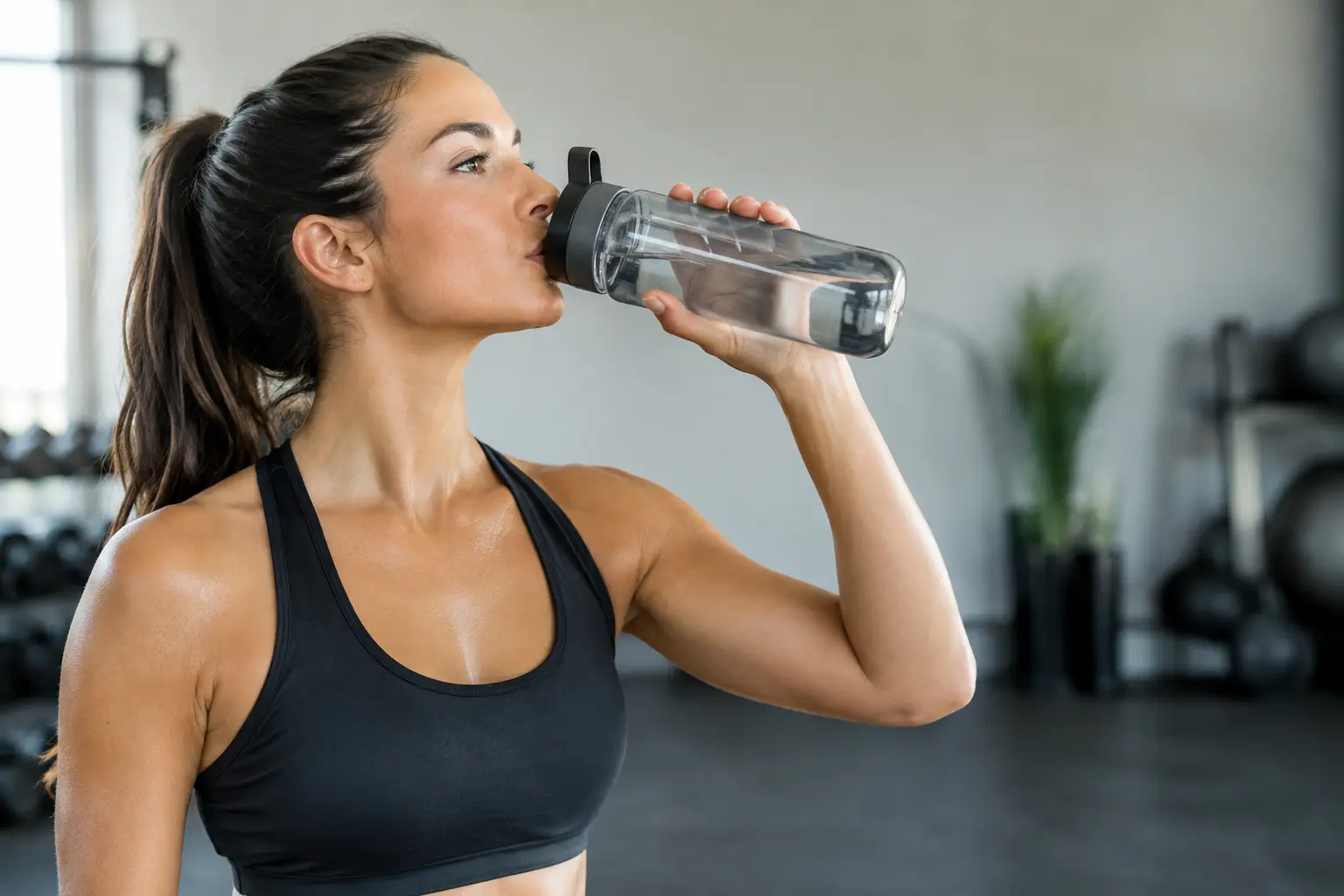
Your final working set does not care whether you meant to drink more water. If your mouth is dry, your head is pounding and your session falls apart halfway through, hydration for gym performance has already been neglected. The problem was not created at the squat rack. It started hours earlier.
Hydration is not a wellness accessory. It is part of your training output. It affects how well you tolerate volume, maintain concentration, regulate temperature and recover for the next session. If you track sets, reps, bodyweight and protein but guess your fluid intake, you are leaving a controllable variable to chance.
Hydration for gym performance starts before training
Turning up with a litre bottle and forcing it down during the warm-up is not a system. Your body needs fluid across the day, especially when you train before work, work in a heated office, commute, consume caffeine or sweat heavily in a commercial gym.
Start with a daily fluid target based on bodyweight. For most men who train regularly, 30 to 40 ml of fluid per kilogram of bodyweight is a sensible baseline before you account for training. A 90 kg man would therefore begin around 2.7 to 3.6 litres across the day. That is not a licence to mindlessly chase a huge number. It is a starting standard to test against your output, sweat rate and recovery.
Then add fluid around training. A practical approach is to have 400 to 600 ml in the two to three hours before you train, followed by another 200 to 300 ml in the final 20 minutes if needed. You are aiming to begin the session normally hydrated, not sloshing, bloated and desperate for the toilet.
Your urine is a useful daily signal, not a medical diagnosis. Pale yellow generally suggests you are on track. Dark, concentrated urine first thing after sleep is normal, but if it stays that way through the afternoon, correct the issue. Do not wait for thirst to become severe. Thirst is useful, but it is not a complete plan for a man trying to execute repeated hard sessions.
What dehydration does to your session
Small losses in body fluid can make hard training feel harder than it should. You may notice your heart rate climbing sooner during conditioning, reduced tolerance for high-rep work, a weaker pump, poorer concentration between sets and a drop in willingness to push the final few reps with control.
This does not mean water is a magic performance drink. Poor sleep, low carbohydrate intake, rushed rest periods and bad exercise selection will still damage a session. But when training is properly structured, hydration removes one more excuse from the equation.
The effect is often clearest during longer sessions, hot weather, leg training, circuits and conditioning blocks. A 45-minute upper-body session in a cool gym creates different demands from 75 minutes of heavy lower-body work after a warm commute. Your standard should adapt to the job, not stay fixed because a generic online rule said two litres was enough.
Train with a bottle, not a panic response
Bring a bottle to every session. Keep it visible. Take regular drinks between sets rather than trying to recover everything in one go after training. Most gym sessions will suit roughly 400 to 800 ml during the workout, but the right amount depends on duration, temperature and your personal sweat rate.
If drinking makes you uncomfortable, reduce the amount per mouthful and spread it out. If you regularly finish sessions with a dry mouth, headache or unusually heavy fatigue, your intake is probably too low before and during training. Fix the earlier part of the day first.
There is also a limit. Excessive water consumption can leave you feeling sick, dilute blood sodium and create a false sense that you are doing the job well. More is not automatically better. Accurate is better.
Measure your sweat rate once
You do not need a laboratory to make hydration more precise. Use bodyweight data. On a normal training day, weigh yourself with minimal clothing before your session. Record what you drink during training. Weigh yourself again afterwards in the same conditions.
If you are 0.8 kg lighter after drinking 0.5 litres, you have lost roughly 1.3 litres of fluid through sweat and breathing. That figure will not be identical every day, but it gives you a useful reference point. Warmer weather, conditioning work and longer sessions will push it higher.
Aim to replace the shortfall steadily after training rather than treating recovery as an afterthought. A useful rule is to drink around 1.25 to 1.5 litres for every kilogram of bodyweight lost, spread over the next few hours. Include food and sodium where appropriate so the fluid is retained rather than simply passing straight through.
Do this test on a hard session, not a casual machine circuit. One data point is better than guesswork. A second test in different conditions will show you how much your needs change.
Water is not always the full answer
Sweat contains sodium. The more you sweat, the more relevant this becomes. For a standard gym workout where you have eaten normal meals, water and your usual food may be enough. For a long session, a very hot day, a heavy sweater or training after a physically active shift, adding electrolytes can be useful.
You do not need to turn every set of cable curls into an endurance event. Sports drinks and electrolyte powders have a place, but they are not compulsory for everyone. Check the label, account for any calories and use them when the conditions justify them.
Sodium also comes from ordinary meals. Salting food sensibly, eating carbohydrate-containing meals and drinking consistently through the day may solve the problem without a cupboard full of supplements. If you have high blood pressure, kidney disease, heart issues or have been advised to limit fluids or sodium, follow clinical advice rather than generic gym guidance.
Carbohydrate matters too. If you train hard after barely eating all day, water alone will not rescue your output. Fluid, sodium and carbohydrate work together. The mission is not to find one miracle input. It is to make every input support the session you planned.
Build a hydration standard you can execute
A target only works if it survives your actual working day. Do not rely on remembering. Use fixed checkpoints: one serving after waking, one with breakfast, one by late morning, one with lunch, one before training and a recovery serving after. The exact split can change, but the standard remains visible.
Use a bottle with a known volume. A 750 ml bottle is easier to track than vague refills from a fountain. If your baseline is three litres, four full bottles gives you an objective number. Record it alongside sleep, bodyweight and training completion for two weeks. Then review the evidence.
Look for patterns. Are headaches appearing on afternoon training days? Does your scale weight crash after long conditioning sessions? Are you drinking most of your fluid after 8 pm because you ignored it at work? These are process failures, not personality traits. Correct them.
Do not confuse clear urine all day with elite discipline either. The goal is stable hydration and repeatable performance, not constant trips to the toilet. Your plan should make training better without disrupting your work, appetite or sleep.
The standard on training and rest days
Rest days do not remove the need to hydrate. Recovery is still happening, glycogen is still being restored and tomorrow's session is still being prepared. Keep your baseline fluid intake consistent, then reduce any extra training fluid because the demand is lower.
Alcohol deserves an honest mention. A few drinks do not erase months of training, but a late night followed by poor sleep, disrupted food intake and low fluid intake will affect the next day's performance. Plan around it or accept the reduced output. Do not call it bad luck.
The same applies to caffeine. Coffee can sit comfortably in a productive training routine, but it is not a replacement for water. If pre-workout makes you sweat more, feel wired and forget to drink until the session ends, tighten the process around it.
Your programme can tell you the sets, reps, tempo and rest. You still have to arrive ready to execute them. Fill the bottle before you leave the house. Hit your daily target before the session begins. Make hydration another standard you keep when nobody is watching.