
Gym Programme Versus Personal Training: Choose Well
Gym programme versus personal training: compare cost, accountability and results, then choose the structure that keeps your progress moving for good.
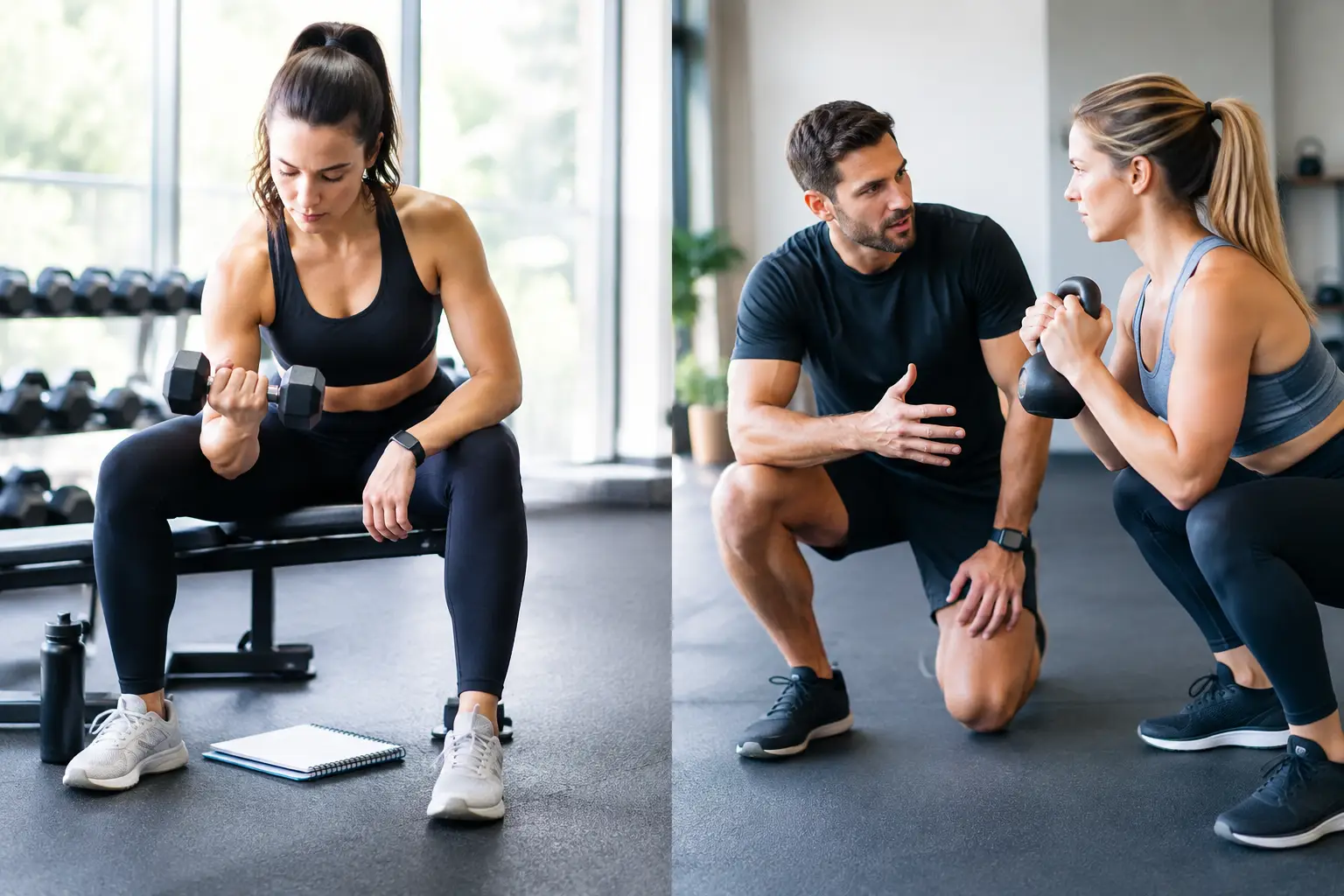
You have trained for months. You know the gym floor, you can use a barbell and you are not short of effort. Yet your bodyweight has not moved with purpose, your lifts are repeating and the mirror gives you nothing clear to work from. That is where the gym programme versus personal training decision matters. Not because one option is universally better, but because an unstructured choice will give you more of the same.
The right question is not, “Which feels more motivating?” It is, “What system will make me execute, measure and progress for the next year?” Your results will come from that system, not from a motivational chat, a complicated exercise variation or another week of guessing.
Gym programme versus personal training: the real difference
A gym programme gives you a defined training route. It tells you what to do, when to do it and how to progress it. A proper programme should cover exercise order, sets, reps, tempo, rest periods, loading progress, recovery and the nutrition targets that support the work.
Personal training gives you access to a coach in real time. They can watch your technique, adjust a session on the spot and provide direct external pressure to turn up. For a beginner who is genuinely unsure how to squat, hinge, press or set up equipment safely, that hands-on input can be valuable.
But do not confuse proximity with progress. Seeing a trainer once or twice a week does not automatically solve the other 166 hours. If you train independently between sessions, eat without targets, fail to log your lifts and never take measurements, you are still relying on guesswork for most of the process.
For an experienced gym-goer, the choice usually comes down to structure versus access. Do you need someone standing beside you for each session, or do you need a complete plan that removes daily decisions and makes your work measurable? They are not the same purchase.
When personal training earns its cost
Personal training is at its best when a coach is solving a specific problem that requires live judgement. That may be learning safe movement patterns after a long break, building confidence after injury clearance, preparing for a technical event or correcting a lift that repeatedly breaks down under load.
It can also suit men who know they will not train unless another person is physically waiting for them. Be honest here. If the appointment itself is the only thing that gets you through the door, a trainer may be the right starting point. A plan only works when you execute it.
The trade-off is cost and dependency. In the UK, regular one-to-one sessions become expensive quickly. More importantly, some clients become passengers. They arrive, get told what to do, leave, then have no process when the trainer is not there. That is not self-reliance. It is rented discipline.
A good personal trainer should teach you how to train alone as well as coach you in person. They should record performance, explain progression, give you clear actions between sessions and hold you to nutrition and recovery standards. If every session is different simply to keep it entertaining, you are paying for novelty, not a progression system.
When a gym programme is the stronger choice
A gym programme is usually the better fit when you already train competently, have access to a commercial gym and need direction rather than supervision. You do not need a new workout every Monday. You need enough repeated exposure to key movements to improve them, with planned changes when the training block demands it.
A serious programme should answer the questions that cause most men to stall. What do I train today? How hard should the set be? How long do I rest? When do I add load or reps? What should I eat at my current bodyweight? Is my recovery keeping up? What does the data say, beyond how I feel after a pump?
That is why a programme needs more than a PDF of exercises. A list without tracking is a suggestion. A plan without nutritional numbers is incomplete. A plan without a progression rule leaves you guessing at the exact point where discipline matters most.
Mean Truth Fitness is built around this distinction. Its fixed 366-level map moves through Muscle Primer, Mass Protocol, Lean Blueprint, Hybrid Method and Fighting Fit. You record sets, tempo-led reps, rest, bodyweight, calories, protein, hydration, sleep and measurements. The aim is not to make training feel busy. It is to make progress visible and decisions fewer.
Cost is not just the price on the invoice
Personal training can be excellent value if you need technical coaching or a short period of intensive support. But calculate the full requirement, not the cost of one session. If your progress depends on weekly appointments for a year, the total is substantially different from paying for a complete programme once.
A programme has a lower financial barrier per session because you do the sessions independently. In return, you must bring the standards. You log honestly. You turn up when nobody is watching. You do not replace prescribed work with whatever machine happens to be free or whatever feels easiest that day.
This is the part many men avoid. They say they need accountability, when what they mean is they want someone else to carry responsibility. External accountability can help, but it should strengthen your own standard, not replace it.
Choose based on the problem, not the sales pitch
Use personal training if you require in-person technique instruction, rehabilitation-aware support or immediate correction under load. Use a structured gym programme if your main problem is inconsistency, poor exercise sequencing, stalled progression, unclear nutrition or a lack of long-term direction.
There is also a middle ground. You can use a small number of personal-training sessions to assess technique, then follow a structured programme for the bulk of your training. This can work well if you are competent but have one or two movements that need proper attention. Get the coaching, learn the standard, then apply it repeatedly.
What you should not do is pay for personal training while treating the rest of your week as untracked free time. Nor should you buy a programme and ignore its progression rules because you fancy changing exercises. Both approaches fail for the same reason: you have broken the process before it had time to work.
Your decision standard
Before you commit, answer these questions without flattering yourself. Can you train safely alone? Can you commit to 45 to 75 minutes several times a week? Will you weigh yourself, record your lifts and measure your waist? Will you follow calorie and protein targets for long enough to assess them properly? And do you need a coach for expertise, or do you need one to force a decision you already know you should make?
If the answer is that you need a clear route, choose the route and follow it long enough to produce evidence. If you need skilled eyes on your movement, invest in that coaching and use it properly. Either way, stop changing direction every fortnight.
Your body does not reward good intentions or gym attendance alone. It responds to repeated, measurable work. Pick the structure that makes that work unavoidable, then hold yourself to it.