
Body Measurements Progress Tracker That Works
A body measurements progress tracker turns gym effort into evidence. Learn what to measure, when to check in and how to act on the data each week properly.
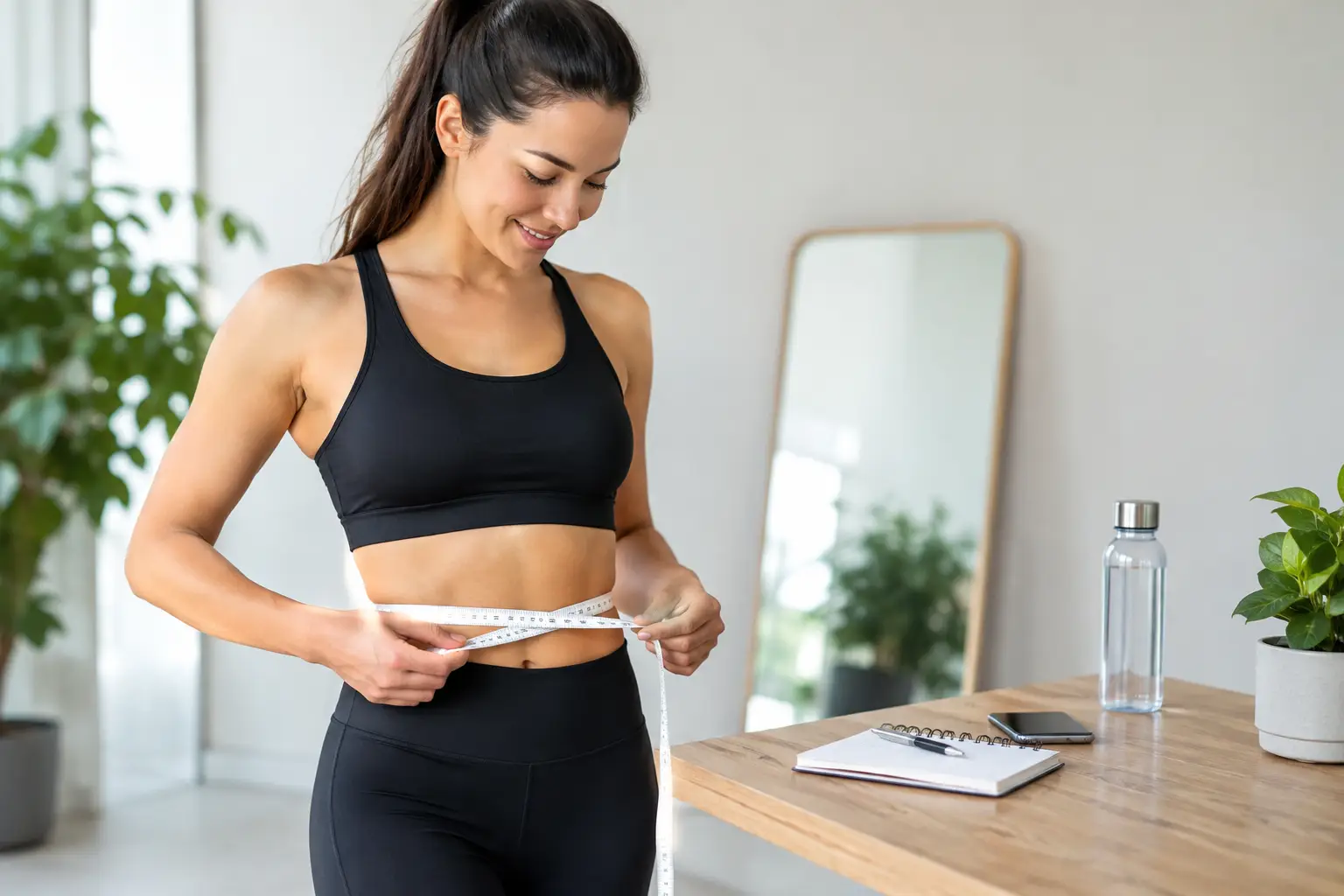
The mirror is a poor coach. Lighting changes. Posture changes. A good pump can convince you that a mediocre week was productive. A body measurements progress tracker removes the guesswork. It gives you evidence of what your training, nutrition and recovery are actually producing.
If you train consistently but still ask whether anything is working, the issue is not always effort. It is often a lack of standards around measurement. You cannot correct what you refuse to record.
What a body measurements progress tracker should tell you
Bodyweight alone does not tell the full story. It can rise because you have eaten more carbohydrate, retained water, built muscle or gained body fat. It can fall because of reduced food intake, dehydration, poor recovery or actual fat loss. One number cannot explain the mission.
Tape measurements provide context. When bodyweight, waist size, training performance and recovery are recorded together, a pattern appears. You stop reacting emotionally to a single weigh-in and start making decisions from a proper body of evidence.
For a man training towards more muscle, better definition or improved conditioning, the most useful tracker answers four questions:
- Is your waist moving in the required direction?
- Are your arms, chest, shoulders, thighs or calves responding to the programme?
- Is your bodyweight changing at a rate that matches the current phase?
- Are your gym numbers and recovery supporting the physical change?
Your tracker is not there to flatter you. It is there to expose whether the process is being executed.
Measure the areas that matter
More measurements do not automatically mean better data. If you measure fifteen sites one week and six the next, the record becomes useless. Choose a fixed set of locations, use the same technique every time and record them at planned check-ins.
For most men, track bodyweight alongside waist, chest, upper arm, thigh and calf measurements. Add hips if fat loss is a central objective or if you want a clearer picture of lower-body change. Measure both left and right limbs if you are addressing a visible imbalance, but do not create extra admin without a reason.
Waist
The waist is one of the most valuable measurements in your tracker. It is a practical marker of whether your nutrition is controlled and whether a gaining phase is becoming sloppy.
Measure at the same point each time, usually around the navel or at the narrowest part of the torso. Pick one method and stick to it. Do not pull the tape tight to manufacture a better number. Do not push your stomach out to make a point either. Stand normally, breathe out naturally and record the truth.
Chest, arms and shoulders
Chest measurement should be taken around the fullest part of the chest, with your arms relaxed. For upper arms, measure the same arm each time at its largest point. Flexed is acceptable if you use the same flexing position every check-in, but relaxed measurements are often easier to reproduce accurately.
Shoulders can be useful during a muscle-building block, particularly if upper-body width is a priority. However, they are harder to measure consistently without help. If the tape position changes, the number is noise. Get a training partner to assist or leave it out.
Thighs and calves
Measure thighs at a fixed distance above the kneecap or at the widest point. The fixed-distance method is generally more repeatable. Calves should be measured at their widest point while standing with weight distributed evenly.
These figures matter because lower body development is easy to overlook when you only judge progress through a T-shirt. Your programme should build a complete physique, not just chase an arm measurement for the sake of it.
The measurement protocol: same conditions, every time
The best body measurements progress tracker fails if the data is collected carelessly. A tape pulled at a different angle, a post-workout pump or a large evening meal can create changes that have nothing to do with tissue gain or fat loss.
Take measurements in the morning, after using the toilet and before food or drink. Do it before training, never after. Use the same tape measure, wear the same minimal clothing and measure in the same location. Record bodyweight under the same conditions too.
A weekly bodyweight average is more useful than a single weigh-in. Step on the scales several mornings per week, record each result and use the average. This smooths out normal fluctuations from salt, hydration, carbohydrate intake and digestion.
Tape measurements do not need to be taken every day. They should not be. Daily measuring encourages pointless reactions to tiny variations. A check-in every two to four weeks is enough for most training phases. The key is consistency, not obsessive frequency.
Take progress photos at the same time as your measurements. Front, side and back. Same lighting, distance, pose and clothing. The photo is supporting evidence, not the main judge. Your job is to compare like with like.
Read the data by training season
A measurement does not mean anything in isolation. Its meaning depends on your current objective.
During a muscle-building phase such as Muscle Primer or Mass Protocol, a modest increase in bodyweight can be appropriate. The standard is not simply to get heavier. You want training performance to improve, key muscle measurements to gradually increase and your waist to remain under control. If your waist climbs quickly while lifts stall, you are not building efficiently. You are likely eating beyond what the work demands.
During a fat-loss phase such as Lean Blueprint, the waist should trend down while strength is maintained as far as practical. Arms, chest and thighs may reduce slightly because glycogen, water and some fat are being lost. That is not failure. The aim is to reveal the muscle you have built, not preserve every centimetre at the expense of the mission.
In a conditioning-led phase such as Hybrid Method or Fighting Fit, your measurements may move more slowly. That is expected when training demands include strength, muscular endurance and fitness. Monitor your waist, bodyweight trend, workout performance and recovery together. Do not force food cuts just because the tape has not changed after one difficult fortnight.
Know when to act and when to hold steady
A single check-in is information. Three consistent check-ins form a trend. Do not overhaul calories, add random cardio or abandon the programme because one measurement looks wrong.
If the waist is rising faster than planned during a gaining phase, first audit compliance. Were calorie targets hit accurately? Has weekend eating become untracked? Are you recording oils, drinks, snacks and meals out, or merely guessing? Are you completing the prescribed sessions with the required effort and progression? The answer is usually in the execution.
If bodyweight is static, waist is static and gym performance is static for several weeks, the plan needs attention. Depending on the phase, that may mean increasing calories, tightening nutrition adherence, improving sleep or addressing recovery before adding more work. More volume is not the automatic answer. Men often try to train their way out of poor recovery and poor food tracking. It does not work.
If your waist is reducing while strength is stable and photos show greater definition, stay the course. You do not need a dramatic weekly change to prove progress. You need a repeatable trend.
Common mistakes that ruin useful data
The first mistake is measuring only when you feel lean or when you have had a good session. That is not tracking. That is selecting evidence to protect your ego.
The second is changing the protocol. If you measure your waist after dinner one month and fasted the next, you have not earned a comparison. The third is measuring too tightly. The tape should sit flat against the skin, not compress it.
Another mistake is treating every increase as muscle and every decrease as fat. Bodies do not operate that neatly. Food volume, stress, sleep, hydration and hard training can all affect the short-term figures. This is why the tracker must sit alongside training logs, calorie intake, protein, hydration and sleep.
Mean Truth Fitness uses measurement check-ins as part of a wider system because the physique is the output of the whole process. Your sets, reps, tempo, recovery and nutrition targets all leave a trace somewhere in the data.
Record the truth, then earn the result
Do not wait until you are confident to start measuring. Start when the result is imperfect. The baseline is not a verdict on you. It is the point from which you build proof.
Set a recurring check-in. Use the same conditions. Record the numbers without negotiation. Then return to the programme and execute the next session properly. The tape measure does not care about excuses, but it will show the result of disciplined work over time.